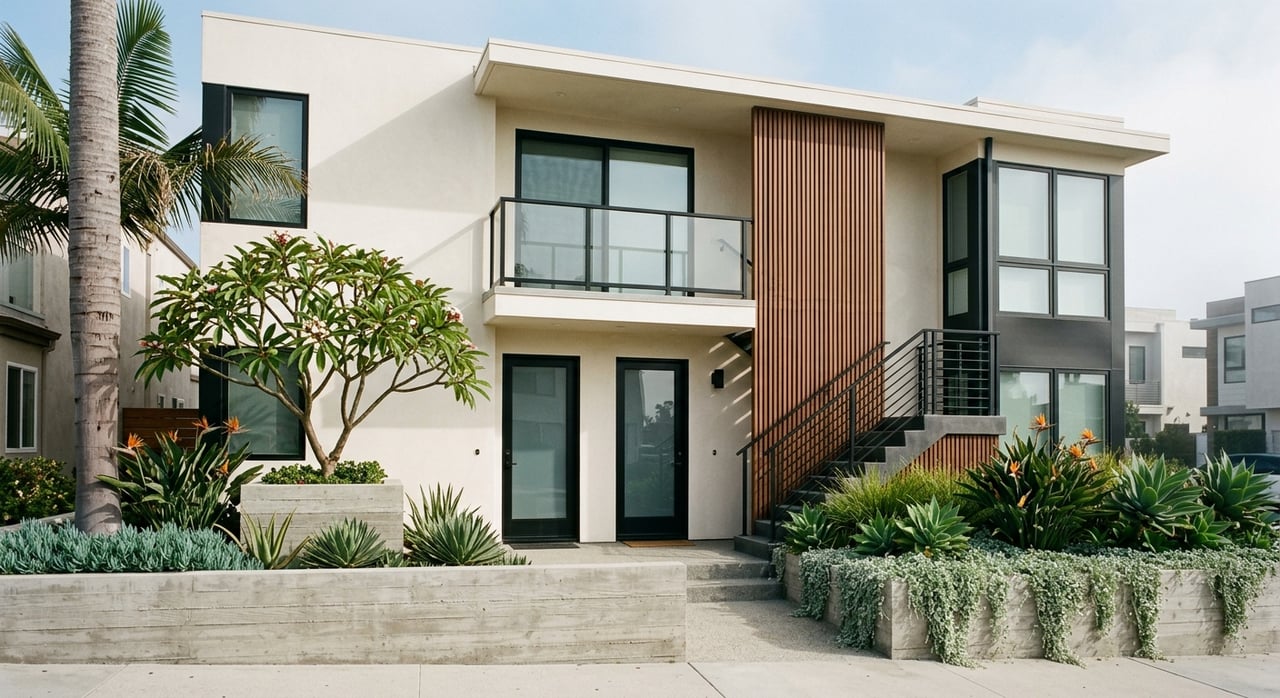
Condos Or Houses In Pacific Beach? Weighing The Tradeoffs
June 18, 2026
June 18, 2026
Buying in Pacific Beach can feel like choosing between lifestyle and logistics. You may love the idea of living close to the beach, restaurants, and everyday conveniences, but the right property type can shape your budget, privacy, and monthly costs in a big way. If you are deciding between a condo and a house in Pacific Beach, this guide will help you weigh the tradeoffs with more clarity and confidence. Let’s dive in.
Pacific Beach is not just any San Diego neighborhood. The City of San Diego describes it as a dense beach community with nearly 47,000 residents, about 1,500 businesses, and heavy activity, especially during summer. That means your buying decision is not only about square footage or price, but also about parking, noise, privacy, and how much day-to-day maintenance you want to take on.
In a coastal area this active, your experience can vary a lot depending on whether you own a condo, townhome, or detached house. Some buyers want easy living and walkability. Others are willing to pay more for space, autonomy, and fewer shared walls.
Pacific Beach is an expensive market across the board, but the current listing ranges show clear differences between condos, townhomes, and houses. While pricing sources vary, they all place Pacific Beach far above an entry-level market.
Here is the practical breakdown from current listing data:
| Property Type | Current Market Snapshot in Pacific Beach |
|---|---|
| Condos | 47 listings, with visible examples from $339,000 to $1,695,000 |
| Townhomes | 6 listings, with examples around $979,000 to $2,329,000 |
| Houses | 23 listings, with examples from about $1.397M to $5.495M |
In simple terms, condos are usually the most accessible entry point. Townhomes often sit in the middle. Detached houses generally require the largest budget by a wide margin.
For many buyers, the biggest advantage of a condo is affordability relative to the rest of Pacific Beach. If your goal is to own in a coastal neighborhood without stretching all the way into detached-home pricing, condos may open the door sooner.
That does not mean every condo is inexpensive. Some Pacific Beach condo listings are priced well into the luxury range, but the category still offers the widest spread of entry points.
Condos are often appealing if you want a simpler ownership experience. Current listing examples highlight features like elevator access, in-unit laundry, and dedicated parking, all of which can support a more convenient lifestyle.
If you travel often, prefer lower exterior upkeep, or simply do not want to manage a yard or major outside maintenance, that can be a meaningful benefit. In a busy beach neighborhood, ease and efficiency matter.
The convenience of condo living comes with shared rules and shared costs. HOA dues in current Pacific Beach condo examples include figures like $500 and $685 per month, and those fees are separate from your mortgage payment.
You may also have less privacy, more shared walls, and less control over building-wide decisions. In a neighborhood known for crowds and activity, building layout, parking access, and sound exposure can make a big difference in your day-to-day comfort.
If you want the most independence, a detached house usually offers it. You are more likely to have separation from neighbors, more control over the property, and fewer shared-living compromises.
For buyers who value yard space, flexibility, or a quieter feel within a busy coastal area, a house may be worth the higher entry cost. This is often the best fit for buyers who want autonomy and long-term lifestyle control.
That extra freedom comes at a premium in Pacific Beach. Current house listings begin around $1.397 million and climb well above $5 million, with many in the $2 million to $4 million range.
That means the payment gap between a condo and a house can be substantial. Even before taxes, insurance, and other costs, the difference in principal and interest alone can reshape what feels comfortable each month.
Owning a detached house also means more upkeep is your responsibility. That may include exterior maintenance, repairs, landscaping, and long-term planning for larger property expenses.
Some buyers see that as a fair trade for privacy and control. Others would rather avoid the time, cost, and unpredictability that can come with maintaining a detached property near the coast.
Townhomes often land in the middle of this decision. In Pacific Beach, current listings suggest they can offer more space and parking than many condos while still costing less than many detached houses.
That said, they usually still come with HOA dues and shared-maintenance structures. If you want a blend of attached-home convenience and a more house-like layout, a townhome may be worth considering alongside condos and houses.
One of the most common mistakes buyers make is comparing only the purchase price. In Pacific Beach, your total monthly budget matters just as much, and often more.
Using Freddie Mac’s average 30-year fixed rate of 6.52% from June 11, 2026, with 20% down, the estimated principal and interest payments look like this:
These numbers are principal and interest only. They do not include property taxes, homeowners insurance, mortgage insurance if applicable, or HOA dues.
That fuller housing payment is where the comparison gets more real. A condo may have a lower loan amount but also a sizable HOA payment, while a house may avoid HOA dues but carry a much larger mortgage and property tax bill.
Property type can also affect how easy it is to finance your purchase. In San Diego County, the 2026 one-unit conforming loan limit is $1,104,000, which matters in Pacific Beach because many houses, and some higher-end condos or townhomes, may push buyers into jumbo financing or require a larger down payment.
If you are looking at entry strategy, several loan paths may be relevant depending on eligibility and qualification:
This is one reason it helps to look at homes through both a real estate and financing lens. The best property on paper is not always the best fit if the loan structure, cash needed, or monthly payment does not align with your full plan.
With condos especially, financing is not only about you as the borrower. It can also depend on the project itself.
HUD states that FHA insures condo loans for units in FHA-approved projects or projects that meet single-unit approval rules. VA also requires eligible buyers to purchase in a VA-approved condo project. For first-time buyers and military households, that can affect which listings are truly workable.
Beyond loan approval, HOA financial health matters in a very practical way. A low or moderate HOA fee does not automatically mean the association is in strong shape.
In California, attached-home buyers receive important HOA and common-interest development disclosures. Under Civil Code 4525, sellers of separate interests in these communities must provide documents that can include governing documents, budget and reserve information, current regular and special assessments, unpaid fines, notices of unresolved violations, requested board minutes, and the most recent exterior-elevated-element inspection report.
That is important because the real issue is not just the monthly HOA fee. It is whether the association appears well funded, whether reserve planning is current, and whether future assessments may be needed.
California law also requires ongoing reserve and financial disclosure. Civil Code sections 5300, 5565, 5550, and 5570 address annual budget reporting, reserve summaries, reserve studies, and disclosures about whether additional assessments or reserve contributions may be needed over the next 30 years.
For you as a buyer, that means a condo or townhome decision should include careful review of the HOA’s broader financial picture. The monthly dues number alone does not tell the whole story.
Pacific Beach’s coastal setting makes building condition especially relevant for attached properties. California Civil Code 5551 requires inspections every nine years for exterior elevated elements in buildings with three or more attached multifamily units, and it places compliance and covered-element maintenance responsibility on the association.
In practical terms, that means older condo communities or larger attached projects may deserve closer review around inspections, reserve planning, exterior upkeep, and repair timing. If you are comparing a condo to a house, this is one of the less obvious but very important tradeoffs.
The right answer usually comes down to your priorities, not just the market. In Pacific Beach, condos often make the most sense if you want a lower entry price, less maintenance, and easier access to a coastal lifestyle. Houses often make the most sense if you are willing to pay more for privacy, flexibility, and control.
You may want to lean toward a condo if you:
You may want to lean toward a house if you:
If you are somewhere in between, a townhome may offer a useful middle ground. It can provide more space or parking than many condos while still avoiding the highest detached-home price points.
In a neighborhood as active and supply-constrained as Pacific Beach, your buying strategy should match both your lifestyle and your financing plan. It helps to compare not just list prices, but also total monthly costs, parking realities, noise exposure, HOA health, project eligibility, and long-term flexibility.
That is where a coordinated approach can make a real difference. When you can evaluate the home, the financing structure, and the true monthly cost together, you are more likely to choose the property type that supports your life instead of stretching it.
If you are weighing condos, townhomes, or houses in Pacific Beach and want help sorting through both the real estate and mortgage side, Olivia Guinn can help you build a clear, informed plan.
From finding the right home to securing the right loan, everything is streamlined into one smooth experience. Real estate guidance and financing support work hand in hand, making each step clearer and more efficient. It’s a simpler way to move from search to closing with confidence.
Olivia Guinn | CA DRE# 02132542
4830 Viewridge Ave Ste D San Diego, CA 92123